If you've lived anywhere between Hawkins and Tyler for a full summer, you already know East Texas humidity doesn't stay outside. It gets into closets, under baseboards, and - because most homes in East Texas sit on a concrete slab - straight up through the foundation itself. East Texas Floor Source has been installing floors across Wood County for more than two decades, and we've learned which materials hold up and which ones we get called back to replace. Here's the honest breakdown.
Why Humidity Is Harder on Some Floors Than Others
Wood expands when it absorbs moisture and contracts when it dries out. In a climate that swings from humid summers to drier winters, that movement never fully stops - it just slows down. Solid wood moves the most, engineered wood less, and materials with little or no organic wood content (vinyl, tile, most laminate cores) barely move at all. That's really the whole story behind picking a floor for a humid climate: how much the material reacts to moisture, not how it looks under showroom lights.
Slab-on-Grade Homes: Moisture Comes From Below
Most homes we work on around Hawkins, Winnsboro, and Mineola are built on a concrete slab, and slabs release moisture vapor upward for the life of the house - concrete is porous, and East Texas clay soil holds water close to the surface. Before we recommend anything for a slab, East Texas Floor Source checks the moisture reading in the concrete itself rather than guessing. That reading decides a lot - it's the difference between a straightforward luxury vinyl plank install and a hardwood job that needs an extra vapor barrier and a longer acclimation period.
Older Pier-and-Beam Farmhouses: A Different Kind of Moisture Problem
Out on the acreage properties around Gilmer, Pittsburg, and Grand Saline, we still see plenty of older pier-and-beam homes with a ventilated crawlspace underneath. That open-air gap helps in some ways - it doesn't trap moisture against the subfloor the way a poorly sealed slab can - but it also means ground moisture and outside humidity reach the underside of the floor more directly. A sagging or under-vented crawlspace is usually a bigger factor in flooring failure out there than the flooring material itself, which is why we walk the crawlspace before we ever talk products.
Room by Room: What We'd Actually Put Down
- Kitchens, laundry rooms, mudrooms: luxury vinyl plank - a fully waterproof core that shrugs off spills and humidity.
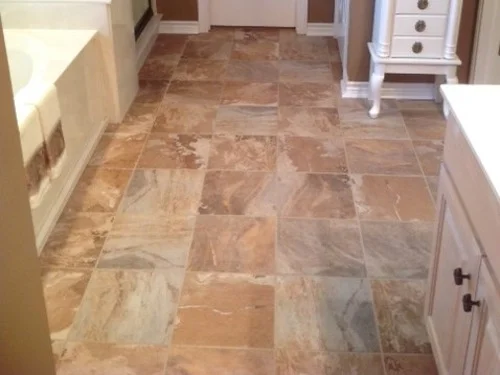
- Bathrooms: tile remains the standard around standing water and steam.
- Living rooms and bedrooms on a slab: engineered hardwood with a proper moisture barrier, or LVP if you'd rather not think about it at all.
- Farmhouse living areas over a healthy, ventilated crawlspace: solid hardwood is usually fine - we just check the crawlspace first.
- Budget-conscious, low-moisture rooms: laminate works well, but we steer it away from anything near a water source.
What We Actually See Go Wrong
Almost every humidity-related flooring failure we're called out to fix traces back to one of two things: flooring installed without ever checking the slab's moisture level, or an out-of-town crew that never set foot in the house before the material showed up. Acclimating hardwood in the actual home for several days before installation, testing the slab, and using the right underlayment aren't optional extras - they're the difference between a floor that lasts twenty years and one that cups or buckles in its first humid summer.
Not sure what your home's foundation can handle?
Get a free in-home estimateThe Bottom Line for East Texas Homes
There's no single 'best' floor for humidity - there's the best floor for your specific foundation, room, and how you actually live. East Texas Floor Source checks the slab or the crawlspace on every estimate, from Hawkins out to Tyler, Longview, and Kilgore, before recommending a single product. See what neighbors have said about the results on our reviews page, or find your town on our Tyler service area page to see options local to you.